Moving to Cyprus from India? Your First 30 Days, Step by Step
By Jayesh Shah · 7 October 2026
Last updated: 4 November 2026. Rules and fees change, so always confirm with the official office before you go.
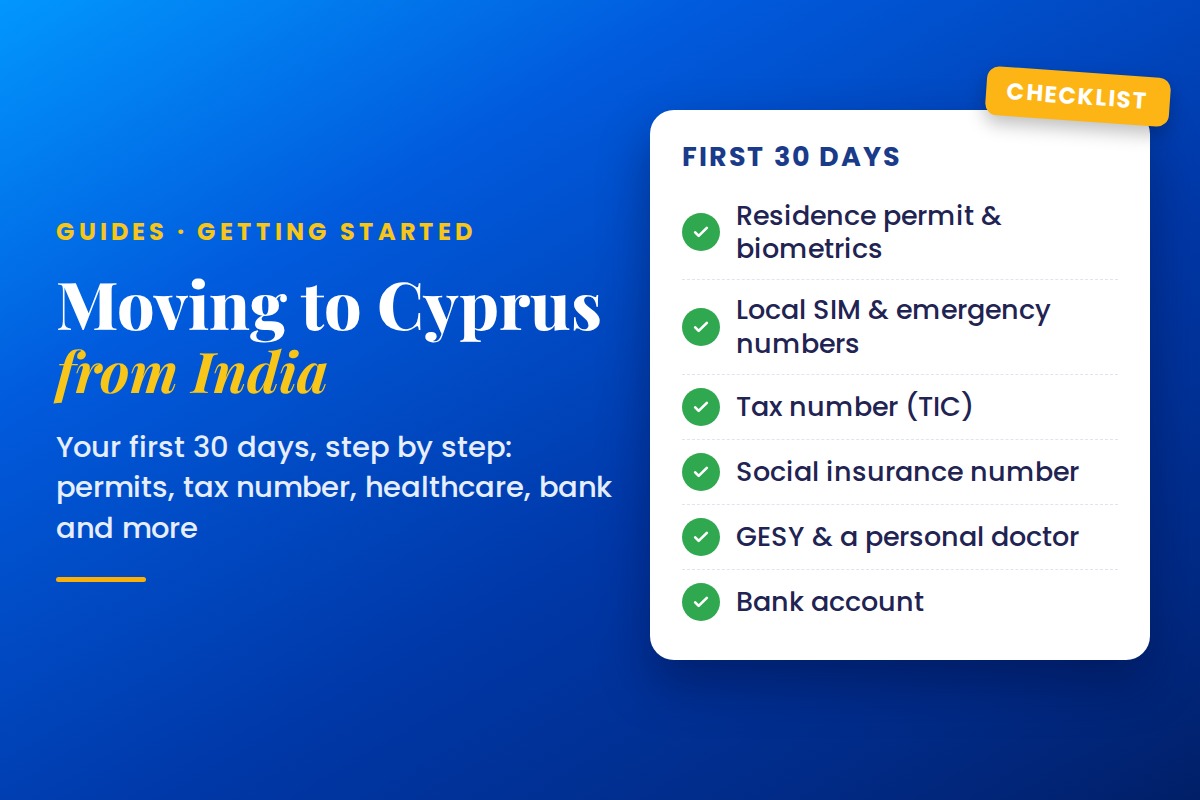
Landing in Larnaca with two suitcases and a job offer is exciting, and a little overwhelming. Within your first few weeks you'll need to deal with a handful of offices, numbers and cards, most of them with names you've never heard before. This checklist puts them in the order most people need them, so nothing important slips through the cracks.
It's written mainly for Indians coming to Cyprus to work. Students and family members follow a similar path, with a few differences we'll cover in separate guides.
Before you fly
- Passport: check it's valid well beyond the length of your planned stay, and carry a few photocopies.
- Entry permit and visa: for most jobs, your employer applies for your entry and employment permit with Cyprus's Migration Department before you travel, and you then collect an entry visa from a Cypriot embassy or consulate. Don't travel on a tourist visa expecting to sort out work later.
- Medical tests: first-time applicants usually need recent blood tests (HIV, hepatitis B and C, syphilis) and a chest X-ray for tuberculosis. Ask your employer whether to do these in India or after arrival, and keep the original reports.
- Certificates: bring originals of degrees, marriage and birth certificates. Some Cypriot offices ask for them to be apostilled in India, which is much harder to arrange once you've left.
- Money for the first month: rent deposits in Cyprus are often one or two months' rent, and your first salary may take a few weeks. Tell your Indian bank you'll be using your card abroad.
Week 1: register and get connected
- Register within seven days: employed workers from outside the EU must register within seven days of arrival, either at the Migration Department in Nicosia or at the district Aliens and Immigration Unit of the Police, where your photo, fingerprints and signature are taken. First registration costs €70 and the residence and work permit itself €130. You'll later receive your residence permit, with a personal ARC (Alien Registration Certificate) number you'll quote on almost every form.
- Get a local SIM: Cyta, Epic, Cablenet and PrimeTel all sell prepaid and monthly plans. Take your passport, as SIM cards are registered to your ID. A local number makes everything else, from banks to GESY, much easier.
- Save the emergency numbers: dial 112 or 199 for police, ambulance or fire, free from any phone. Operators speak Greek and English.
- Register with India: sign up on the Ministry of External Affairs' MADAD portal so the High Commission of India in Nicosia can reach you in an emergency, and save its number: +357 22 351741.
Weeks 2 to 4: the numbers that run your life
- Tax Identification Code (TIC): your Cyprus tax number. You can apply online by creating an account on the Tax Department's Tax For All portal, with your passport and residence documents. Employers and banks will ask for it.
- Social insurance number: every employee needs one. Your employer registers you as a new hire, and as a non-EU worker you'll need your residence permit to get the number. Ask HR to confirm it's done, as contributions count towards your pension and benefits.
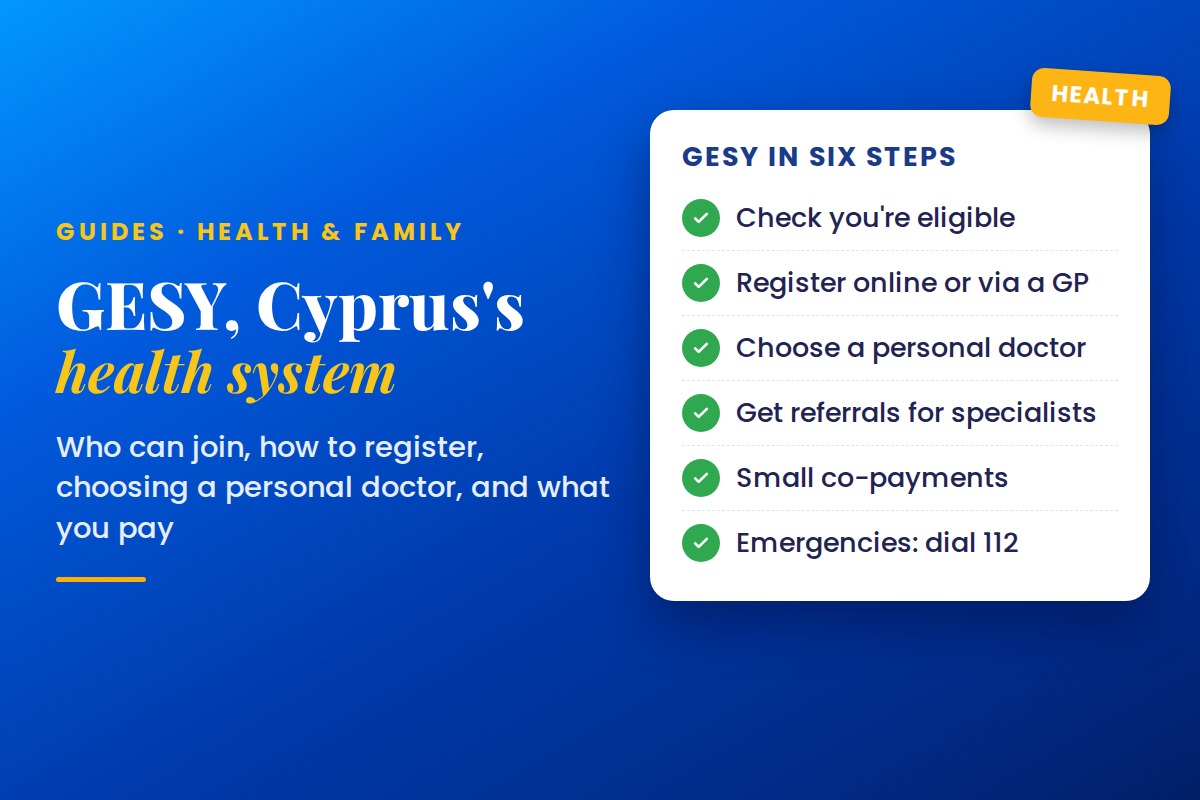
- GESY and a personal doctor: employed third-country nationals can join GESY, the national health system. Register on the GESY beneficiary portal or ask a contracted GP to register you, then choose a personal doctor. Until then, keep any private health insurance your employer arranged.
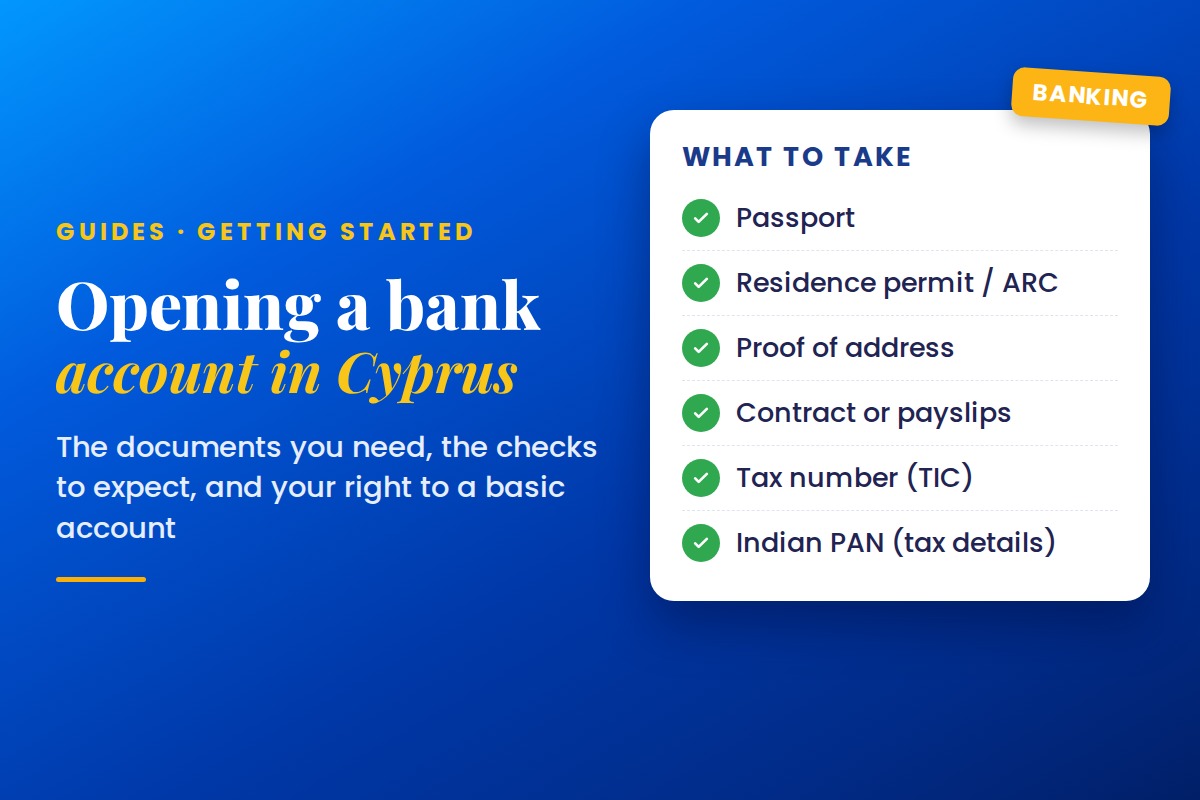
- Bank account: expect to show your passport, residence permit or ARC, employment contract or payslips, proof of address (a recent utility bill or rental contract) and often your TIC. Non-EU applicants can face extra checks, so start early and ask your employer if they have a preferred bank.
- Driving: an Indian licence with an International Driving Permit may get you started, but the rules differ for residents, so check with the Road Transport Department before you buy or rent a car.
Keep a "Cyprus folder"
Make one folder, paper and on your phone, for every document you collect: passport pages, permit, ARC, TIC, social insurance number, GESY confirmation, tenancy agreement and payslips. You'll be asked for the same papers again and again, especially when you renew your permit.
What this means for you
- Do it in order: registration and your residence documents come first. Almost everything else, from your social insurance number to your bank account, depends on them.
- Never skip the seven-day registration: missing it can cause problems with your permit later.
- Keep your own passport: you may need to hand it over briefly for applications, but you should always get it back.
- Watch out for fake agents: be wary of anyone who charges fees for a job or promises a "guaranteed" permit. Check job offers and contracts carefully before you pay anything.
- Ask the community: thousands of Indians have done this before you. Our What's On page lists community events where you can meet people who've been through it.
Read also: Indians Are 1 in 5 Non-EU Workers in Cyprus: Who Can Legally Work Here? and High Commission of India Notice: Apostille Now Mandatory for Key Consular Documents
Sources: EU Immigration Portal, Migration Department, Tax Department, EURAXESS Cyprus, GESY, Politis, High Commission of India, Nicosia
Disclaimer: We make every effort to ensure the information in our guides is accurate and up to date, but rules, fees and procedures can change without notice. Please verify the details with the relevant official authority before acting on them. This guide is for general information only and is not legal, financial or immigration advice.
Related stories
Spotted an error? Tell us.