Indians Are 1 in 5 Non-EU Workers in Cyprus: Who Can Legally Work Here?
By Anamika Dave · 28 September 2026
Rules and fees change, so always confirm with the official office before you go.
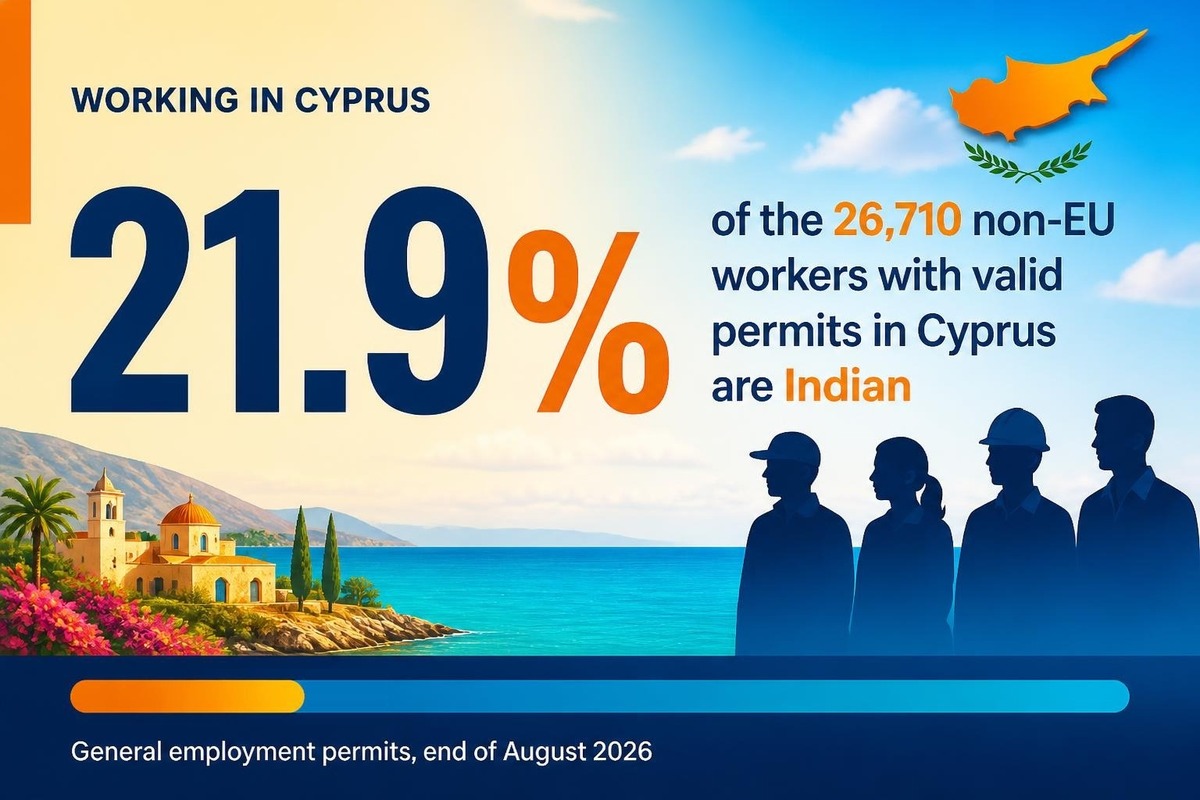
Cyprus needs more workers, and Indians are already a big part of the answer. According to figures from the Deputy Ministry for Migration reported by Cyprus Mail, 26,710 non-EU nationals held valid residence and work permits in the "general employment" category at the end of August 2026. Indians made up 21.9% of them, around 5,850 people, second only to Nepalese workers (28.8%).
India is also one of the main countries of origin for Cyprus's 33,919 domestic workers, and the government has recently set up "structural mobility" arrangements with countries including India and Egypt to recruit workers through official channels.
Which jobs are open to non-EU workers?
Under the general employment category, non-EU nationals can work in sectors facing shortages, including:
- Agriculture and livestock farming
- Food delivery
- Manufacturing
- Wholesale and retail trade
- Other occupations with a shortage of local workers
Domestic work is a separate category. Staff of foreign-interest companies and other highly skilled professionals, a route used by many Indian professionals, fall under their own migration programmes.
How a legal job offer works
An employer must first pass a labour market test, which shows the Department of Labour that the role can't be filled by Cypriots, EU citizens or other people already living legally in Cyprus with the right to work. Only then does the Department approve and stamp the employment contract, and the Migration Department issue the residence and work permit.
Studying in Cyprus? The rules on part-time work
Non-EU students can work part-time if they:
- Are enrolled full-time at a recognised higher education institution
- Have finished their first semester and enrolled in the second
Work must be outside study hours and is capped at 20 hours a week during term and 38 hours a week when classes are not running. Students may work as domestic workers or in hospitality, manufacturing, services, wholesale and retail, agriculture and livestock, and health and social care.
Why this matters now
MPs and trade unions have raised serious concerns about some temporary employment agencies, linking them to poor treatment of foreign workers and even human trafficking. If you, or a friend or relative back home, is being offered a job in Cyprus, make sure the contract is approved and stamped by the Department of Labour and the permit is issued before starting work. If anything seems wrong, check with the Department of Labour or the High Commission of India in Nicosia.
Related stories
Spotted an error? Tell us.