No One Should Go Hungry: What India's Langar Tradition Teaches Us on World Food Day
By Anamika Dave · 16 October 2026
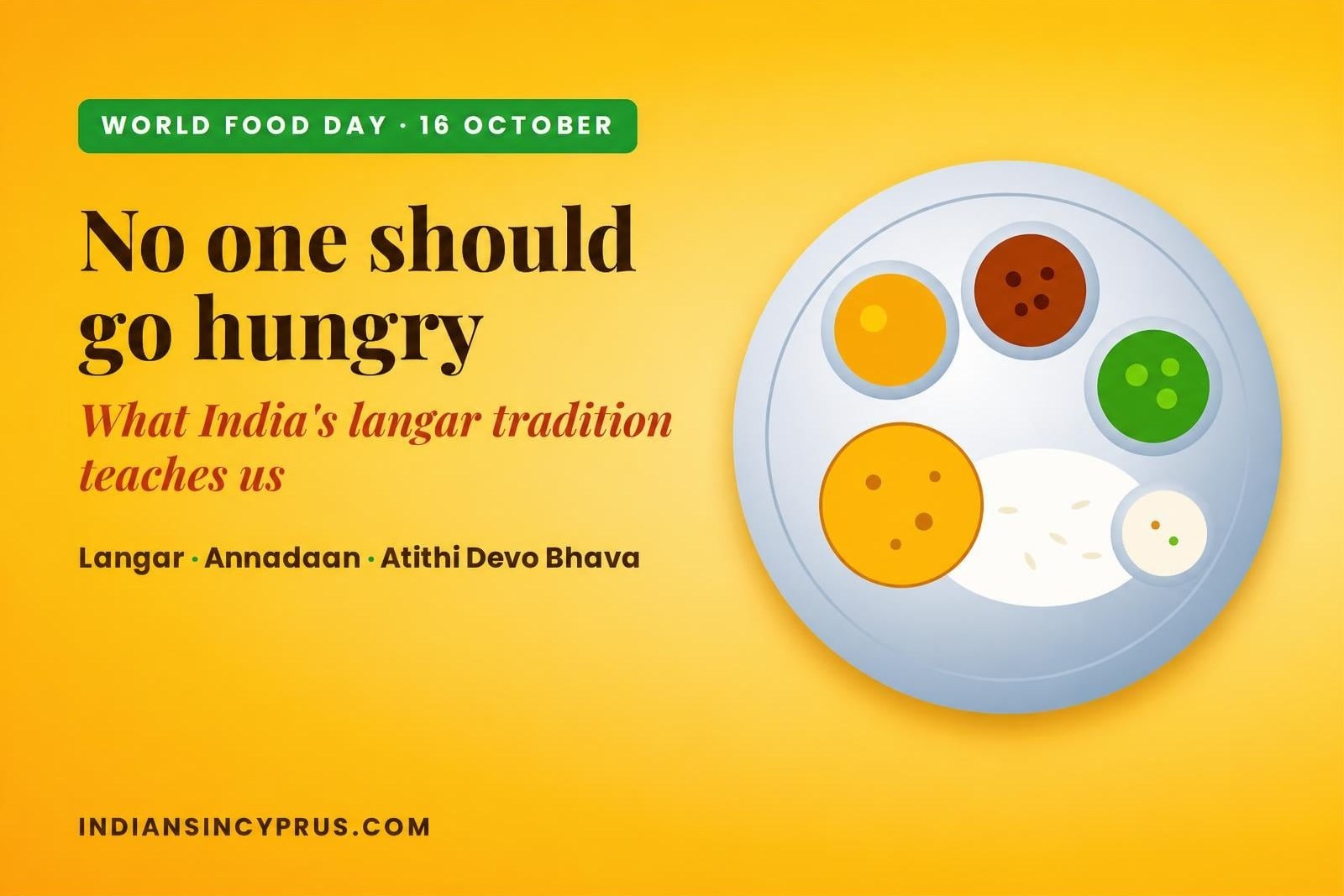
Walk into almost any gurdwara in the world, sit down on the floor beside complete strangers, and someone will place a hot meal in front of you. Nobody asks your name, your religion or whether you can pay. On World Food Day, that simple act says more about ending hunger than many speeches.
Why 16 October matters
The date marks the birthday of the FAO, the UN agency that leads global work against hunger, which came into being on 16 October 1945. For 2026 the FAO has chosen the theme “Innovate today. Nourish tomorrow.”
There is some good news: according to the FAO's 2026 State of Food Security and Nutrition in the World report, hunger fell for the third year in a row. Even so, about 645 million people, roughly one in every thirteen people on the planet, still went hungry in 2025. Behind that number are children who skip meals, parents who eat last, and workers far from home who send most of what they earn to their families.
India's culture of feeding others
For many Indians, sharing food is not charity in the formal sense. It is simply how things are done. A few traditions show this well:
- Langar. Started by Guru Nanak, the first Sikh Guru, the free community kitchen serves everyone alike. Guests sit together in rows, called pangat, so a labourer and a businessman eat the same food side by side. At the Golden Temple in Amritsar, volunteers cook and serve tens of thousands of meals every single day.
- Annadaan. Across Hindu temples and family occasions, offering food (anna) as a gift (daan) is seen as one of the most meaningful forms of giving. Many temples share prasad or full meals with whoever comes.
- Atithi Devo Bhava. Honour your guest as you would honour God: that is the teaching of this short line in the Taittiriya Upanishad, and it explains why an Indian host rarely lets anyone leave without eating.
- Feeding at scale. The same idea runs through public policy. Under the PM POSHAN scheme, around 11 crore children across India get a free hot lunch at school, and the meal also encourages many of them to keep coming to class.
What India grows for the world
India is not only generous at the table; it is also one of the planet's great food producers. It sells more rice abroad than any other country, makes more milk than any other nation, grows more millets than any other nation, and grows and sells more spices than anyone else. We have gathered these and other achievements, each with its source, on our Made in India page.
When you buy basmati, turmeric or ragi flour in a Cyprus supermarket, there is a good chance it started its journey on an Indian farm.
What this means for you
You don't need to cook for thousands to keep the langar spirit alive. Here are some practical ways to help, here in Cyprus:
- Waste less at home. No EU country throws away more food per head than Cyprus: about 286 kg per person a year in 2023, the latest year reported, going by Eurostat data covered in the Cyprus Mail and Politis. Plan your weekly shop, freeze leftover dal and rice, and use up vegetables before buying more.
- Run a restaurant, bakery or grocery? Look at Food Connect, a free app from Friends of the Earth Cyprus that lets businesses list surplus food that is still safe to eat, so charities and people in need can collect it instead of it going in the bin.
- Give to local food support. Caritas Cyprus helps migrants and others in need, whatever their nationality or religion, and has long offered food support through its migrant centre in Nicosia and its parishes. Check what they currently need before you drop anything off.
- Share a meal. Invite a new arrival, a student or a colleague who is far from family to your table, especially during festival season. A home-cooked meal can mean a lot to someone who has just moved.
- Try langar. If you visit a gurdwara, in Cyprus or on a trip to India, sit down for langar and offer to help with serving or washing up. Cover your head, remove your shoes and ask a volunteer what to do. Everyone is welcome.
- Teach the children. Let them help pack a food donation or serve at a community event. Small habits like not leaving food on the plate start at home.
Guru Nanak Jayanti is coming up next month, and it is a lovely time to experience the langar tradition for yourself.
Read also: Masala Meets Mediterranean: 7 Easy Food Swaps for Indians Living in Cyprus
Sources: FAO (World Food Day 2026), FAO (SOFI 2026 hunger figures), The National (Golden Temple langar), Wikipedia (Pangat), Wikipedia (Atithi Devo Bhava), The Tribune (PM POSHAN), The Wire (PM POSHAN 2026-27), The Tribune (rice exports), News On AIR (milk), Permanent Mission of India to the UN (millets), PIB (spices), NE Now (annadanam), Caritas Internationalis (Caritas Cyprus), Cyprus Mail (Food Connect and food waste), Politis (Cyprus food waste)
Related stories

Spotted an error? Tell us.