Masala Meets Mediterranean: 7 Easy Food Swaps for Indians Living in Cyprus
By Alex P · 30 September 2026
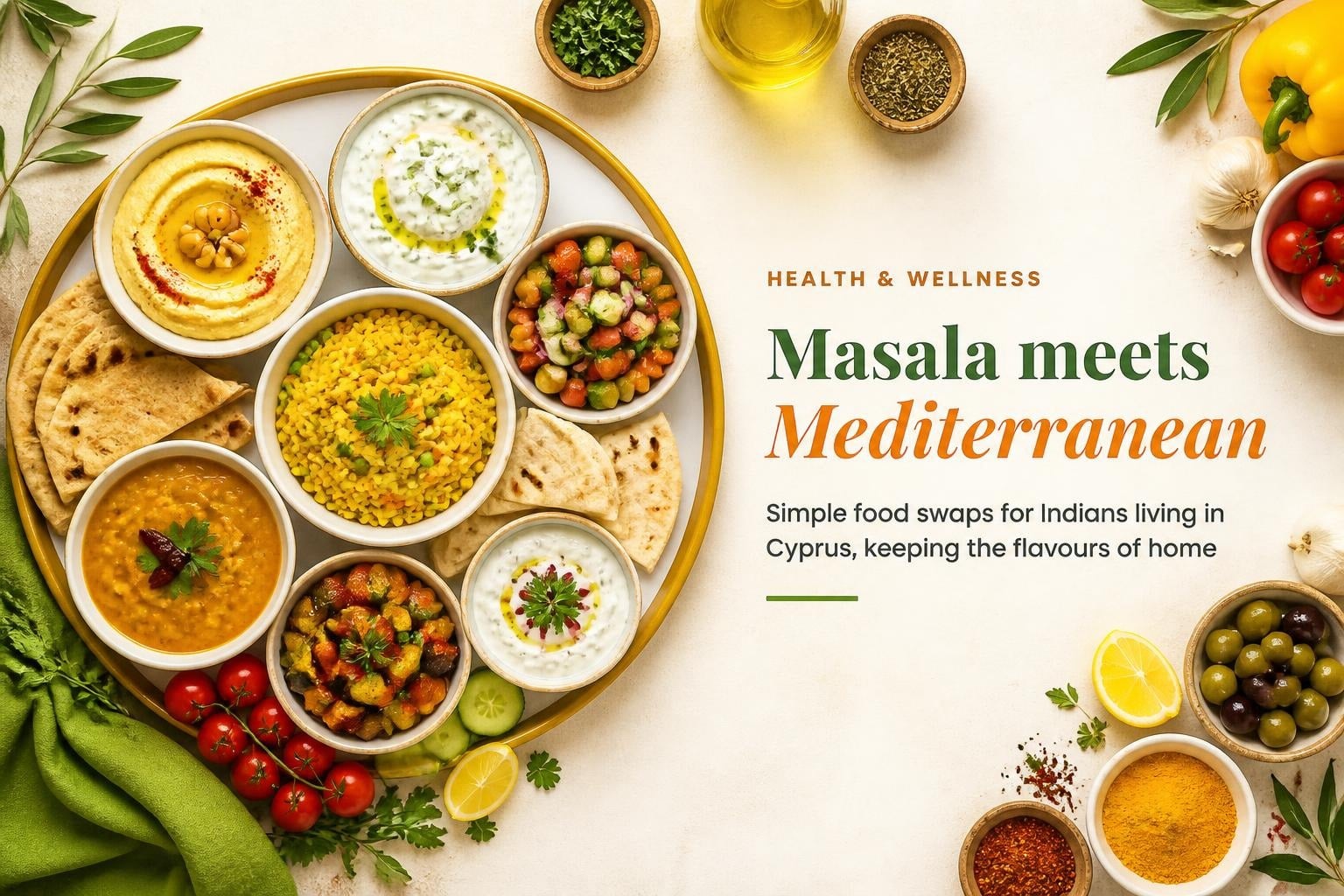
Living abroad changes how we eat. Long working hours, a new supermarket and the pull of comfort food from home can quietly reshape our plates: more rice, more fried snacks, more sugar in the chai, less time to cook. The good news for those of us in Cyprus is that we live in one of the homes of the Mediterranean diet, and it has far more in common with a traditional Indian kitchen than you might think.
Why this matters for us
People of South Asian background are at a higher risk of type 2 diabetes, and the risk starts at a lower body weight. According to Diabetes UK, for South Asians the risk rises from a BMI of around 23, compared with 25 for many other groups. We also tend to carry weight around the middle, which is linked to both diabetes and heart disease. So even if you don't feel overweight, what you eat every day counts.
Where Indian and Mediterranean food already agree
Both kitchens are built on vegetables, pulses, yoghurt, herbs and spices. A Mediterranean-style diet, rich in vegetables, beans, whole grains, fruit, nuts and olive oil, is linked to a lower risk of heart disease. Many of its staples are already familiar to us, and Cypriot favourites like lentil soup (fakes) and black-eyed beans (louvi) could sit comfortably next to dal on any Indian table.
7 easy swaps that keep the flavour
- Temper with olive oil. Use olive oil for everyday tadka and sabzi, and keep ghee as a flavour finish rather than the main cooking fat.
- Fill half your plate with vegetables. Cyprus markets are full of okra (bamies), taro (kolokasi, much like our arbi), aubergines, courgettes and leafy greens. Cook them the desi way.
- Rethink the rice and roti portion. Keep them, but make them a quarter of the plate. Try whole-wheat atta, brown rice, or bulgur wheat, a local staple that works well in pulao-style dishes.
- Put pulses at the centre. Dal, chana, rajma and local beans are filling, high in fibre and gentle on blood sugar.
- Go easy on halloumi. It's delicious but salty. Treat it like paneer, as an occasional treat, and grill it rather than fry it.
- Swap the namkeen. Replace fried snacks with a handful of nuts or seasonal fruit: figs and grapes in autumn, oranges and mandarins in winter.
- Sweeten less. Cut the sugar in chai gradually, half a spoon at a time, and keep mithai for festivals rather than every weekend.
Beyond the plate
- Walk after dinner. A 15–20 minute stroll after meals helps your body handle the food. The seafront promenades in Limassol and Larnaca, or your own neighbourhood, make it easy most of the year.
- Drink water, not juice. Cyprus summers are long and hot, and sugary drinks add up fast.
- Get checked. Registered with GESY? Ask your personal doctor about checking your blood sugar, cholesterol and blood pressure, especially if diabetes or heart disease runs in your family.
Eating well abroad doesn't mean giving up the food we grew up with. It means cooking it with a little Mediterranean wisdom, and that's one of the best things about calling Cyprus home.
This article is for general information only and isn't medical advice. Speak to your doctor before making major changes to your diet, especially if you have a health condition.
Sources:
Related stories

Spotted an error? Tell us.