One Home, Three Languages: Keeping Your Mother Tongue Alive in Cyprus
By Priya Joshi · 30 September 2026
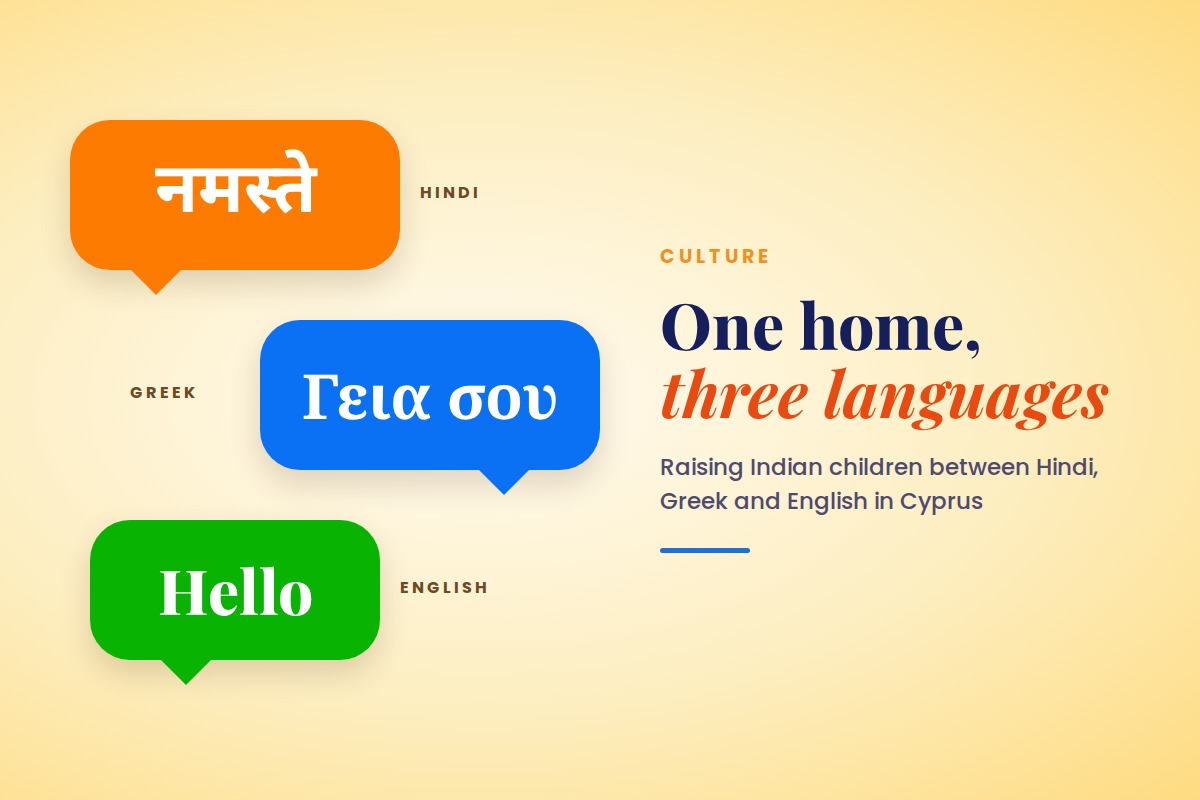
Ask a group of Indian parents in Cyprus about their children's languages and you'll hear the same story. At school it's Greek or English. With friends it's a mix of both. At home, the grandparents on the video call speak Hindi, Tamil, Malayalam, Gujarati or Punjabi, and the child answers in English. Somewhere between Limassol and the family WhatsApp group, the mother tongue starts to slip away.
If that sounds familiar, you're not alone. Here's why it's worth holding on to, and some simple ways to do it without turning home into a classroom.
Why the mother tongue matters
- It keeps family close. Being able to chat, joke and share stories with grandparents in their own language builds a bond that translation never quite can.
- It carries the culture. Festivals, prayers, songs, recipes and even our sense of humour live in our languages. Without the language, a lot of that is lost.
- It's a gift, not a burden. Children who grow up with several languages learn to switch between them naturally, and many adults who lost their parents' language later wish they hadn't.
Seven ideas that actually work
- Pick a home language and stick to it. Some families speak only the mother tongue at home; others split it, with one parent speaking one language and the other a second. What matters is being consistent.
- Make the grandparent call a language moment. Ask Dadi, Nani or Thatha to tell a short story or teach one new word each week.
- Turn screen time into mother-tongue time. Cartoons, songs and children's shows in Hindi or your regional language make listening fun, not homework.
- Read together at bedtime. Bring back picture books from your next trip to India, or ask visiting relatives to pack a few.
- Cook and name it. The kitchen is a classroom in disguise: every spice, vegetable and dish has a name worth learning.
- Celebrate out loud. Festivals, bhajans, garba nights and community events give children a reason to use the language with other kids, which is when it really sticks.
- Don't forget Greek. Learning Greek alongside our own languages helps children feel at home in Cyprus too. The goal isn't choosing one identity, it's having all of them.
Be patient
It's normal for children to answer in English, mix languages in one sentence or go through phases of refusing to speak the home language. Keep speaking it anyway, without pressure or scolding. Children often understand far more than they say, and the words come out when they're ready, usually at the most unexpected moment.
Raising children between three languages is one of the quiet adventures of Indian life in Cyprus. It takes effort, but it gives them something rare: a home in India, a home in Cyprus, and the words to belong in both.
How does your family handle languages at home? Share your tips with us on social media, and we'd love to feature them.
Read also: Hindi Finds Its Voice in Nicosia on Hindi Diwas 2026
Related stories


Spotted an error? Tell us.