Residence Permits in Cyprus Explained: Which One Do You Need?
By Jayesh Shah · 7 October 2026
Last updated: 4 November 2026. Checked against the Migration Department's pages on gov.cy.
Ask ten Indians in Cyprus about their "pink slip" and you'll hear ten different stories. That's because there isn't one residence permit, but several, each with its own rules about who can apply, whether you can work, and what happens when it runs out. Knowing which one you hold, and what it allows, protects you from expensive mistakes.
This guide explains the main types in plain language. It is for non-EU nationals, which includes Indian passport holders.
First, the basics
- Visa vs permit: a visa lets you enter Cyprus; a residence permit lets you stay. Most people need both, one after the other.
- The "pink slip": the everyday name for a temporary residence permit. With it comes your ARC (Alien Registration Certificate) number, your personal ID number for most official forms.
- Who decides: the Migration Department, part of the Deputy Ministry of Migration and International Protection, issues and renews permits. You may still see its old name, the Civil Registry and Migration Department, on older forms.
- A permit has a purpose: it is granted for a specific reason, such as a particular job, a course of study or joining a family member. Doing something it doesn't cover, like working on a visitor permit, can put your stay at risk.
The main permits, one by one
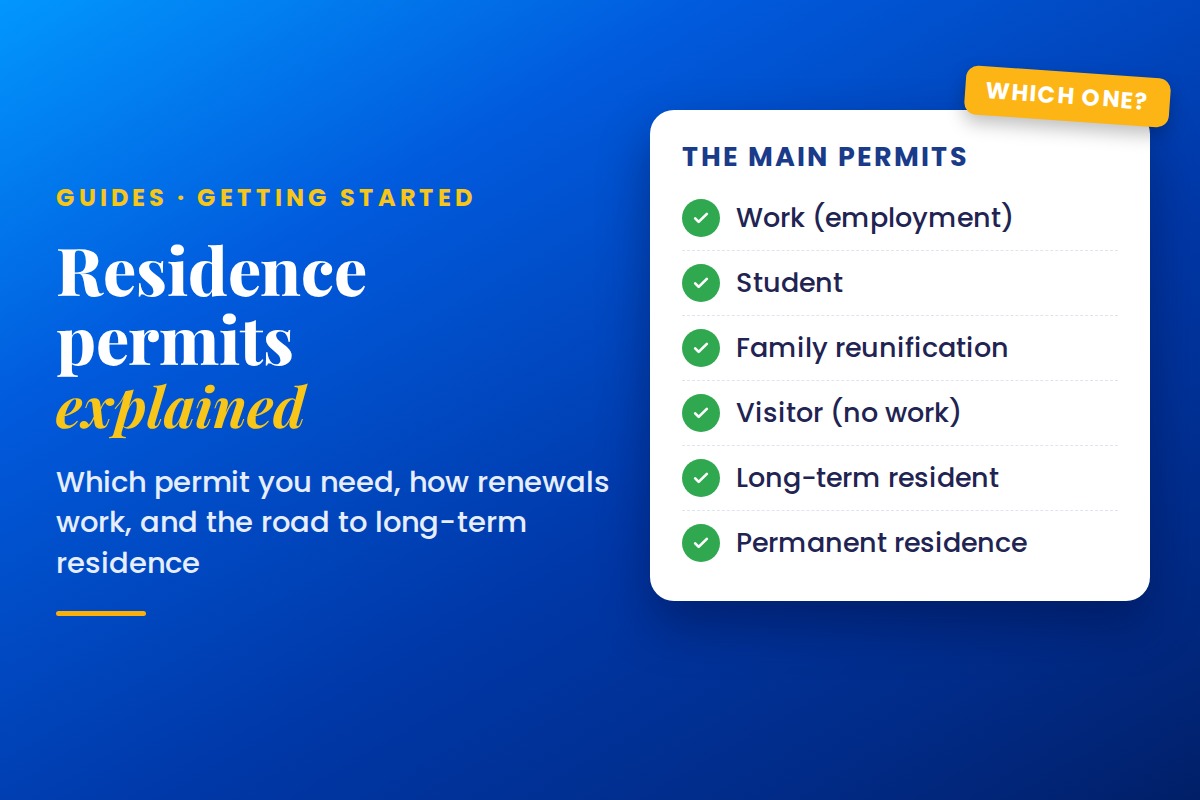
1. Work (temporary residence and employment permit). The most common permit among Indians in Cyprus. Your employer applies for it before you arrive, and it's tied to that employer and that job. Each permit runs for up to three years at a time, and for most jobs in this general category the total time you can stay in Cyprus for work is four years. If you and your employer end the contract by agreement, you both sign a release document, which gives you 30 days to find a new employer and apply again. Don't start a new job until the change is approved.
2. Student. For full-time students at a recognised college or university in Cyprus. It is normally issued for a year at a time and renewed each academic year, as long as you stay enrolled and show you can support yourself. Students from outside the EU may work only in the jobs and sectors listed in a Labour Ministry decree, for up to 20 hours a week during term and 38 hours a week when classes stop, and only after a District Labour Office has approved the employment contract. Graduates with a master's degree or higher can apply to stay for up to 12 months to look for work or start a business.
3. Family reunification. Lets the spouse and children of a non-EU resident join them in Cyprus. As a general rule, the sponsor must have lived in Cyprus legally for at least two years and hold a permit valid for at least one more year; the spouse must be at least 21, and the marriage must have taken place at least a year before applying. You also need to show a stable income and suitable housing. Some highly skilled staff, for example at approved foreign-interest companies, can bring their families sooner. The permit costs €200, the department aims to decide within nine months, and a spouse who joins you can work on the same terms as you. Income thresholds change, so check the current figures with the Migration Department before you apply.
4. Visitor. For people who live in Cyprus on their own income from abroad, such as retirees. It does not allow you to work for a Cypriot employer.
5. Long-term resident status. After five years of legal, continuous residence, non-EU nationals can apply for long-term resident status. Short trips abroad don't break the five years, as long as no single absence lasts six months or more and the total doesn't exceed ten months. Students don't qualify, and neither do people whose stay is officially temporary, such as seasonal workers. Applicants are also expected to pass a Greek language exam at A2 level and a test on Cyprus's political and social life. The application fee is €30, a decision takes six to twelve months, and the status is granted for five years at a time and can be renewed.
6. Permanent residence. Cyprus also offers permanent residence routes for people of independent means, the best known being the fast-track route through an investment of at least €300,000 (for example in a new home) together with a secured annual income of at least €50,000 from abroad. These routes suit investors and retirees rather than most employees.
Renewals: don't leave it late
- Apply online, in the right window: most renewals with the same employer can now be filed on gov.cy with a verified CY Login account: from 60 to 30 days before expiry for ordinary work permits, and from 90 to 30 days for staff of foreign-interest companies, family members and long-term residents. From 1 January 2027, these renewals will be accepted online only.
- Keep the receipt: when you apply to renew, keep the receipt you're given. It shows your application is in progress. You'll still need to give your fingerprints and photo in person.
- Update your documents: expect to provide a fresh employment contract or letter, recent payslips, proof of address and valid health insurance. Your social insurance and tax records should be in order too.
What this means for you
- Know your category: check what your permit says. Your rights to work, study, bring your family or change job all depend on it.
- Diary your expiry date: set a reminder three months before, so you never miss the online renewal window.
- Thinking long term? Start Greek early: if you plan to stay five years or more, an A2 Greek certificate is one of the steps to long-term residence. Community and municipal classes are a gentle way to begin.
- Get advice before you switch: changing jobs, switching from study to work or bringing family over are where most problems start. Speak to the Migration Department or a qualified immigration lawyer first, and be wary of anyone promising "guaranteed" permits for a fee.
Read also: Indians Are 1 in 5 Non-EU Workers in Cyprus: Who Can Legally Work Here? and High Commission of India Notice: Apostille Now Mandatory for Key Consular Documents
Sources: EU Immigration Portal, Migration Department – family reunification, Migration Department – long-term residence, Mondaq – pink slip FAQ, GK Law – long-term residence, GK Law – permanent residency, Migration Department – work permits, Migration Department – students, Migration Department – long-term residence, gov.cy – online renewals from 2027
Disclaimer: We make every effort to ensure the information in our guides is accurate and up to date, but rules, fees and procedures can change without notice. Please verify the details with the relevant official authority before acting on them. This guide is for general information only and is not legal, financial or immigration advice.
Related stories

Spotted an error? Tell us.