Phones and SIM Cards in Cyprus: A Practical Guide for Indians
By Jayesh Shah · 7 October 2026
Last updated: 4 November 2026.
For most of us, the first thing we do after landing is hunt for Wi-Fi to tell the family we've arrived safely. The second should be getting a Cyprus phone number. Your employer, landlord, bank and doctor will all want one, and many apps and services send their codes by SMS.
Who's who
The main mobile providers in Cyprus are Cyta, Epic, PrimeTel and Cablenet. All sell prepaid (pay-as-you-go) and monthly plans, and most also offer home broadband, so you can often bundle the two. Cyprus mobile numbers start with 9 and have eight digits; from abroad, people dial +357 in front.
Prices and bundles change often, so compare current offers on the providers' websites or in their shops rather than relying on last year's deals.
Bring ID: the new registration rules
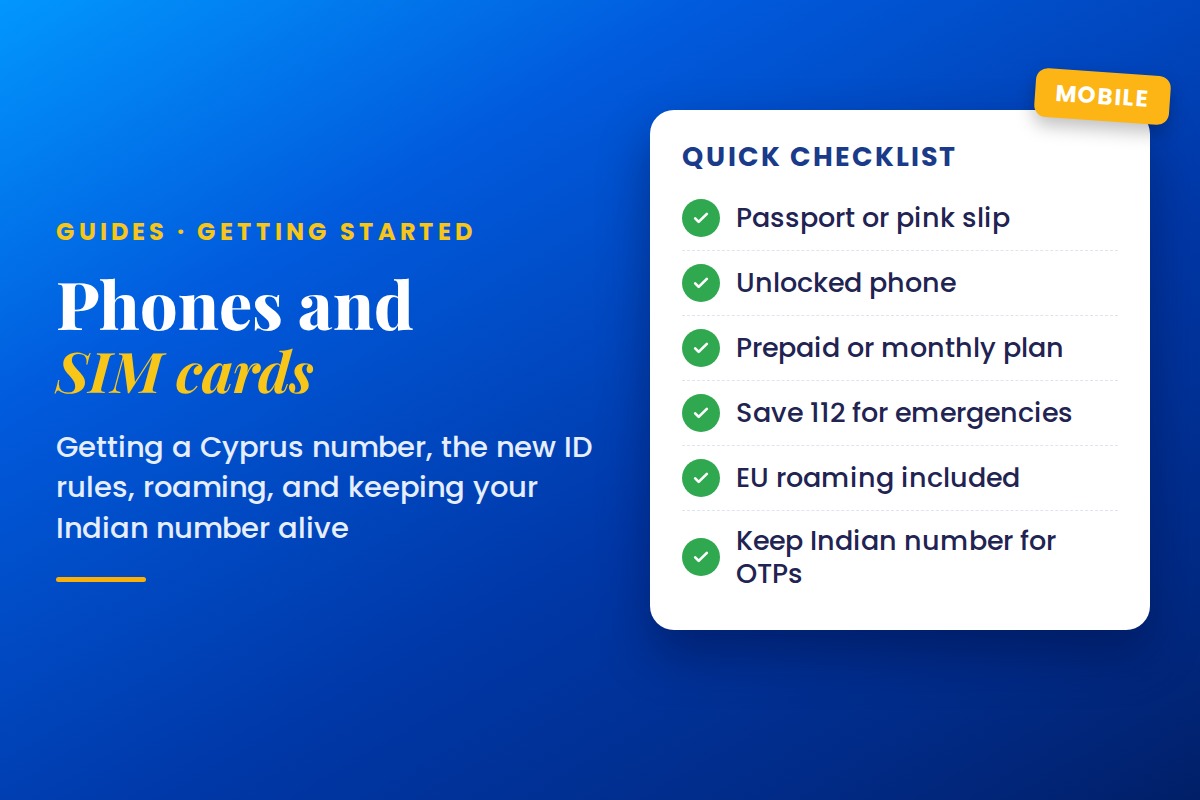
Since late 2025, Cyprus no longer allows anonymous SIM cards. Every SIM, including prepaid, must be registered to its user's ID, and prepaid numbers that weren't registered by the December 2025 deadline were due to be disconnected. As a non-EU national you'll register with your passport, or with your residence permit (pink slip). If you bought a prepaid SIM before the rules came in and never registered it, check with your provider straight away.
Prepaid or monthly?
- Prepaid: quick to set up on arrival, no contract and no credit check. A good choice for your first weeks or if your plans are uncertain.
- Monthly plan: usually better value for heavy data users, and often bundled with home internet. Contracts may require proof of address and a bank account, so many people switch from prepaid once they're settled.
- eSIM: the main providers support eSIM in some form, but the steps differ. Some sell eSIMs online, others need a shop visit with your passport, so ask before you buy.
Your phone from India
Most phones bought in India work in Cyprus, as long as they're unlocked. If your phone was tied to an Indian operator's plan, check that it accepts other SIMs before you travel. Dual-SIM phones are ideal: one slot for Cyprus, one for your Indian number.
Calls, roaming and staying in touch
- Travelling in the EU: with a Cyprus SIM, EU "roam like at home" rules mean you can usually use your normal calls, texts and data in other EU countries at no extra charge, within fair-use limits. Check before trips to non-EU countries, including the north of the island, where your phone may connect to non-EU networks charged at international rates.
- Calling India: most families stay in touch over WhatsApp or other internet calls. If you need to call Indian landlines or offices regularly, ask your provider about international bundles.
Keep your Indian number alive
Don't let your Indian SIM lapse. Indian banks, UPI apps, Aadhaar and income tax services all send one-time passwords (OTPs) to your registered Indian number. Indian prepaid numbers can be disconnected if they aren't recharged or used for a while, so keep a small recharge going, or switch to a low-cost postpaid plan.
NPCI, which runs UPI, lets NRIs use UPI with an international mobile number in a growing list of countries. As of October 2026, Cyprus isn't on that list yet, so for now your Indian number is still the key to UPI.
What this means for you
- Day one: buy a prepaid SIM with your passport, and save 112 (or 199) for emergencies.
- Once settled: compare monthly or bundled plans with home internet.
- Use a dual-SIM phone: keep your Indian number active for OTPs and UPI.
- Check before you cross: roaming in the north of the island or outside the EU may cost extra.
Read also: Moving to Cyprus from India? Your First 30 Days, Step by Step and Opening a Bank Account in Cyprus: Documents, Checks and Your Rights
Sources: Caritas Cyprus – prepaid SIM law, Cablenet – prepaid registration, Cyprus Mail, Your Europe – roaming, TaxBuddy – UPI for NRIs
Disclaimer: We make every effort to ensure the information in our guides is accurate and up to date, but rules, fees and procedures can change without notice. Please verify the details with the relevant official authority before acting on them. This guide is for general information only and is not legal, financial or immigration advice.
Related stories

Spotted an error? Tell us.