Taking Cypriot Friends or Your Spouse to India? The e-Visa Explained
By Jayesh Shah · 12 October 2026
Last updated: 12 October 2026.
Diwali at your parents' home in Jaipur. A wedding in Kochi over Christmas. A first trip to Goa with colleagues from the office in Limassol. More and more Cypriots are travelling to India with Indian friends and family, and the first question is always the same: how do they get a visa?
For most short trips, the answer is India's e-Visa. It's applied for entirely online, and Cypriot passport holders have been eligible for tourism since 2017. Here's what your guests need to know.
Who can use the e-Visa?
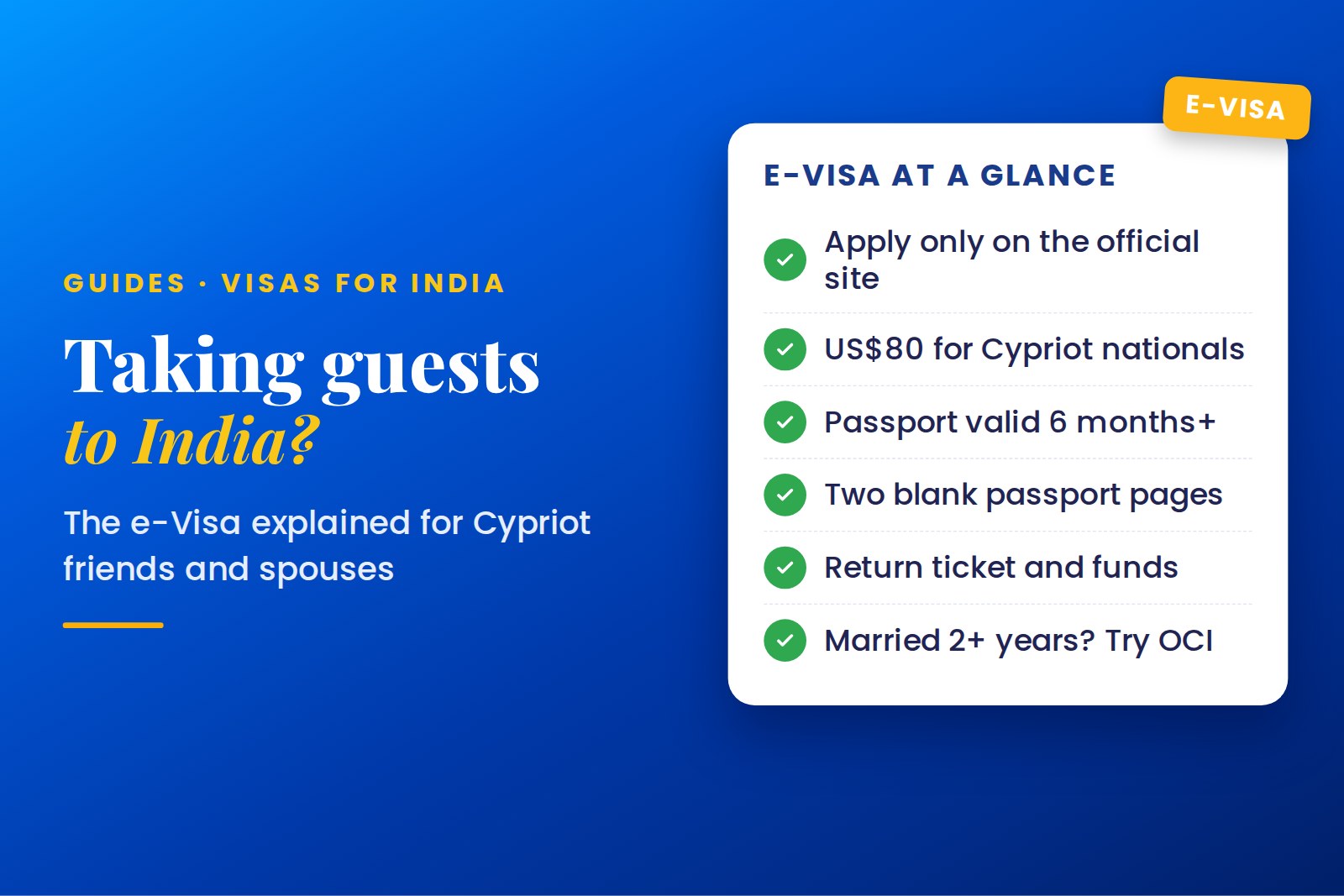
Think of the e-Tourist Visa as the holiday visa. It covers trips for fun and family: touring, visiting people you know, short medical care, or a quick, informal work meeting. Before applying, your guest should have:
- A passport that won't expire within six months of landing in India, with two or more empty pages for stamps.
- Their own passport: children listed on a parent's passport can't use the e-Visa.
- A return or onward ticket, and enough money for the stay.
The e-Visa isn't open to everyone: holders of diplomatic or official passports, and travellers with Pakistani passports or Pakistani roots, go through the regular visa process. Non-Cypriot friends should check that their own nationality is on the e-Visa list.
How to apply, step by step
- Use only the official website. Applications go through the Government of India's portal, indianvisaonline.gov.in. The High Commission warns against agents and look-alike sites that promise "express" visas for an extra fee.
- Have the files ready. A recent photo against a plain background and a scan of the passport's photo page, in the formats and sizes the portal asks for.
- Pay online. According to the High Commission, Cypriots pay US$80. Fees vary by visa type and can change, so check the amount on the portal when applying.
- Get the approval by email, print it, and carry it with the same passport you applied with.
Longer one-year and five-year e-Tourist visas also exist, for people who plan to visit often. Under these, reports say you can't spend more than 180 days in India in any one calendar year.
What about my Cypriot spouse?
A spouse visiting for the holidays can use the e-Visa like any other tourist. But if you've been married for a while, there may be a better option.
- OCI card. If your marriage is registered and has lasted two years or more, your non-Indian husband or wife can apply for Overseas Citizen of India status (this also works if you hold OCI yourself). OCI gives a lifelong, multiple-entry visa, so no more applications before each trip.
- Moving to India together? A tourist visa isn't meant for living there. For longer stays, a spouse usually needs an Entry (X) visa from the High Commission in Nicosia, which handles regular visas on paper.
Travelling over Diwali or Christmas
Flights and approvals both get busier in the festive season. Apply as soon as tickets are booked, check that every name is spelled exactly as in the passport, and keep a printed copy of the approval for check-in at Larnaca or Paphos and at Indian immigration.
What this means for you
- Help your guests, but let them apply. Every visitor needs a separate application in their own name. You can sit with them, but don't pay agents.
- Check passports first. Six months' validity and two blank pages catch out many travellers.
- Choose the right visa. Short holiday: e-Tourist. Frequent visits: the one-year or five-year option. Married to an Indian for two years or more: look into OCI.
- Ask when unsure. For anything unusual, contact the consular section at cons.nicosia@mea.gov.in.
Read also: OCI Cards From Cyprus: Who Can Apply, How, and When to Update and Diwali 2026 in Cyprus: Dates, Puja Time and How to Celebrate
Sources: High Commission of India, Nicosia (e-Visa), High Commission e-Visa eligibility notice, High Commission visa guidelines, High Commission visa fees, High Commission OCI overview, Indian e-Visa portal, VisasNews
Disclaimer: We make every effort to ensure the information in our guides is accurate and up to date, but rules, fees and procedures can change without notice. Please verify the details with the relevant official authority before acting on them. This guide is for general information only and is not legal, financial or immigration advice.
Related stories
Spotted an error? Tell us.