Bringing Ghee, Mithai or Mangoes Back From India? What Cyprus and EU Rules Allow
By Anamika Dave · 2 November 2026
Last updated: 2 November 2026. Rules can change, so check with Cyprus Customs if you are unsure before you fly.
Every Indian family knows the scene at the end of a trip home: a steel dabba of Ma's ghee wrapped in three layers of plastic, a box of mithai from the favourite halwai, maybe a few Alphonsos squeezed in beside the clothes. The bad news is that some of these treats are not allowed into Cyprus, and getting it wrong can cost you more than the food.
Because Cyprus is in the European Union, what you can bring back from India is set by EU rules, and those rules are strict about two things in particular: dairy and fresh produce. Here is what you need to know before you pack for the trip back.
The quick answer
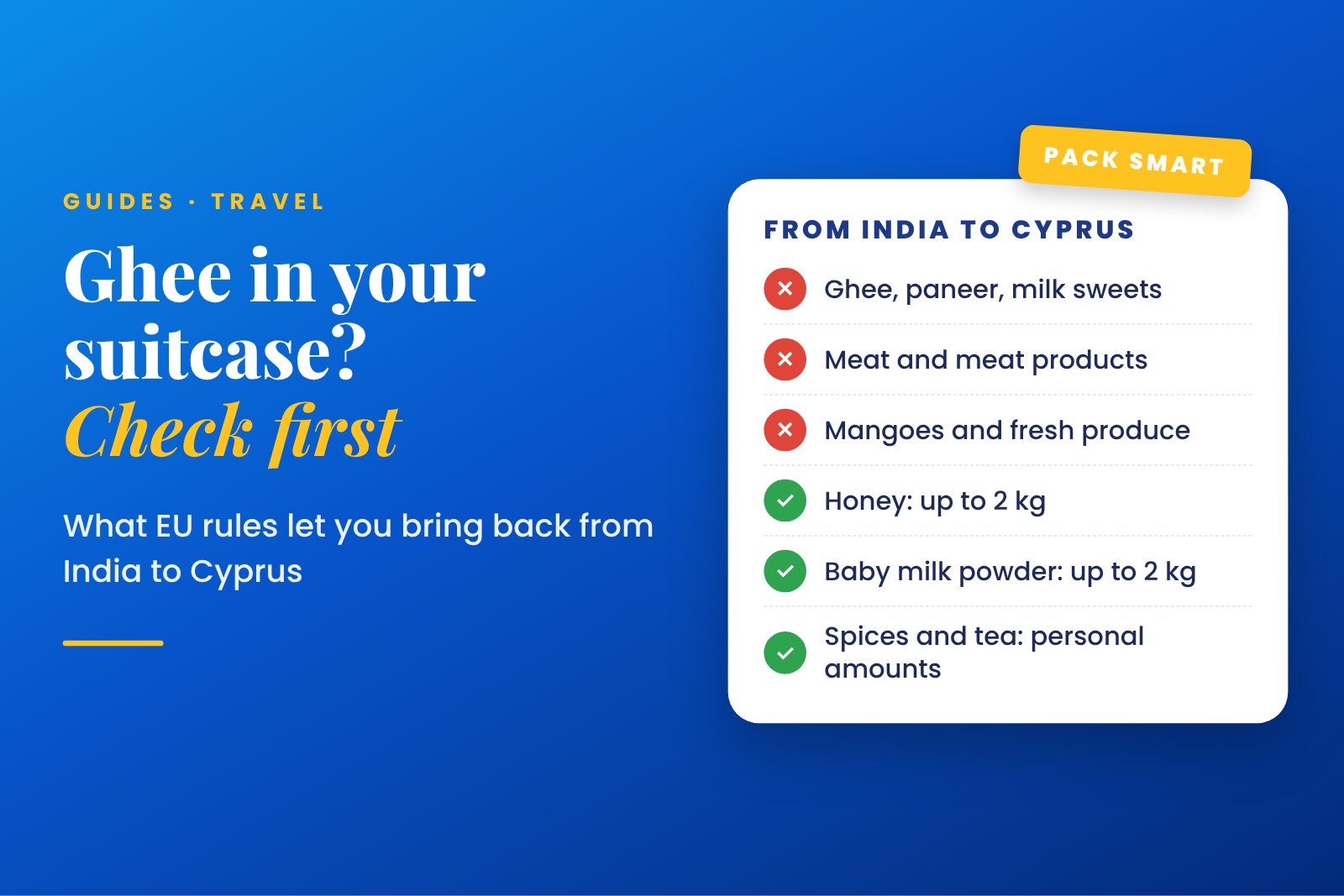
- Leave at home: ghee, butter, paneer, khoya and anything else made from milk, including milk-based mithai; all meat and meat products; fresh fruit and vegetables (including mangoes and curry leaves), plants, flowers and seeds for planting.
- Allowed in small amounts: honey (up to 2 kg), powdered baby milk, baby food and special medical foods (up to 2 kg, sealed and branded), and fish or fish products (up to 20 kg, or one whole fish).
- Usually fine: processed plant-based foods such as spices, masala mixes, tea, dried herbs, flour, papad and namkeen, as long as they contain no meat or milk and you keep to personal quantities.
Why ghee and mithai are the problem
Meat and dairy are simply off-limits: EU law gives no allowance at all for them in the luggage of passengers landing from India or anywhere else outside the Union. The aim is to keep animal diseases out of Europe, so it makes no difference that the ghee is homemade, sealed or only for your family. Cyprus's airport operator, Hermes, lists the same rule for Larnaca and Paphos: meat products from non-EU countries and milk products are prohibited.
For Indian travellers, that rules out more than you might think. Desi ghee, paneer and khoya are dairy. So are most sweets made from milk, such as barfi, peda, rasgulla, rasmalai and gulab jamun, and many others are cooked in ghee. Check the label: if milk, milk solids or ghee are on the ingredients list, the sweets should stay in India.
The main exception is for babies and patients. Up to 2 kg of powdered infant milk, baby food or special food needed for medical reasons is allowed, as long as it doesn't need refrigerating before it is opened, is a branded product and stays in its unbroken packaging (unless you are using it).
Mangoes, curry leaves and other fresh produce
Fresh produce is covered by a second set of EU rules, designed to keep crop pests out. Plants, fruit, vegetables and cut flowers coming from outside the EU in your luggage need a phytosanitary certificate, an official document from the exporting country confirming they are free of pests. The only fruits that escape this rule are dates, bananas, coconuts, pineapples and durians.
Mangoes are not on that list, and neither are fresh curry leaves, chillies or drumsticks. Finland's food authority points out that ordinary travellers find these certificates very hard to get, so in practice fresh produce from India is off the menu. Hermes's own customs page agrees, listing fresh fruit and flowers as banned.
What you can usually bring
Processed plant-based foods are a different story. According to Finland's food authority, which applies the same EU rules, travellers from outside the Union may freely carry processed foods made from plants: think masalas and whole spices, chai leaves, flour, tinned vegetables, nuts and seeds, plus any other food with no meat or milk in it. Dutch government guidance adds that fruit which has already been turned into food, for example by cooking it, baking it, freezing it or making it into a pulp, needs no plant health certificate.
One caution on spices and tea: the EU applies extra safety checks to some foods of plant origin from certain countries, and Germany's customs service says the exemption for travellers covers only small amounts, up to 2 kg, carried for personal use. So a few packets of garam masala and your favourite chai are fine; a suitcase full is not.
Honey (up to 2 kg) and fish (up to 20 kg, or one fish of any weight) are also allowed, which is good news for anyone bringing back dried fish from the coast.
What happens if you get it wrong
At the airport you may be checked. According to the EU, any meat or dairy you haven't declared will be taken away and destroyed, and you risk a fine or even a criminal case. If you are not sure whether something is allowed, walk through the red channel and declare it: losing a jar of ghee is far better than paying a fine.
What this means for you
- Buy dairy here: ghee, paneer and Indian sweets are sold by Indian grocers in Cyprus, so there's no need to risk carrying them.
- Pack the right gifts: spice mixes, tea, papad, namkeen, non-dairy sweets and pickles without meat travel well. Keep them in their sealed shop packaging so the labels are easy to read.
- Read the labels: many sweets that look dry, like kaju katli, can contain ghee or milk. If in doubt, leave them out or declare them.
- Travelling with a baby? Carry formula and baby food in sealed, branded packs, and keep to 2 kg.
- Brief your family: if parents are visiting from India, share these rules before they pack. Our guide below explains their visa too.
- Mind the duty-free limits: from outside the EU, Hermes lists 200 cigarettes, 1 litre of spirits over 22%, 2 litres of wine and 16 litres of beer.
Read also: Bringing Your Parents From India to Cyprus? The Visitor Visa Explained
Sources: Your Europe (EU), European Commission – plant health, Hermes Airports – customs allowance, Finnish Food Authority, German Customs, Government of the Netherlands
Disclaimer: We make every effort to ensure the information in our guides is accurate and up to date, but rules, fees and procedures can change without notice. Please verify the details with the relevant official authority before acting on them. This guide is for general information only and is not legal advice.
Related stories


Spotted an error? Tell us.