One Festival, Many Faces: How India Celebrates Navratri, From Garba to Golu
By Anamika Dave · 12 October 2026
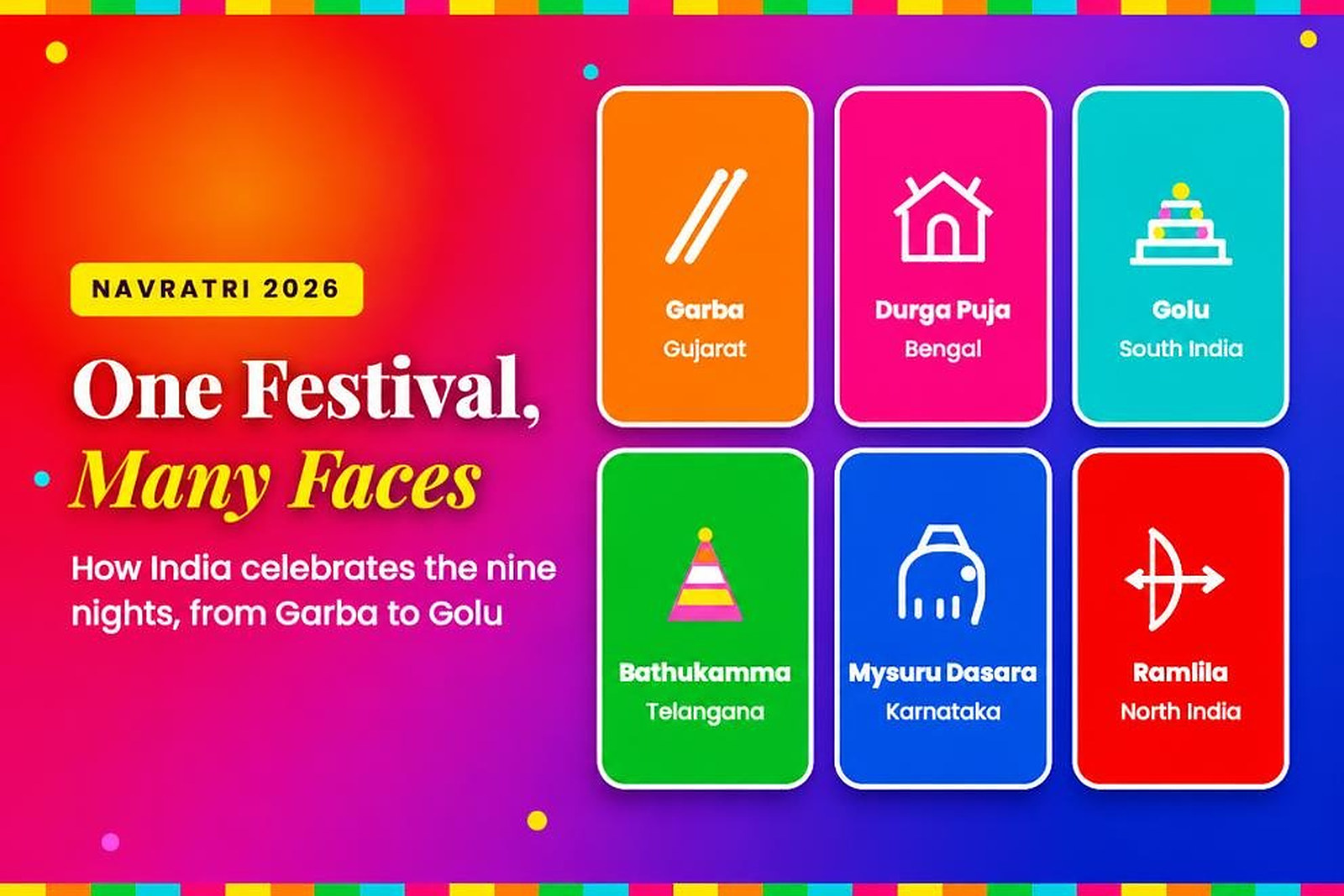
Ask ten Indians in Cyprus what Navratri means to them and you could get ten different answers. For one family it is nine nights of twirling to Garba. For another it is a goddess arriving home in a pandal, a staircase of dolls in the living room, or a tower of wild flowers floated on a lake. Same festival, same nine nights, and yet each corner of India marks it in its own way.
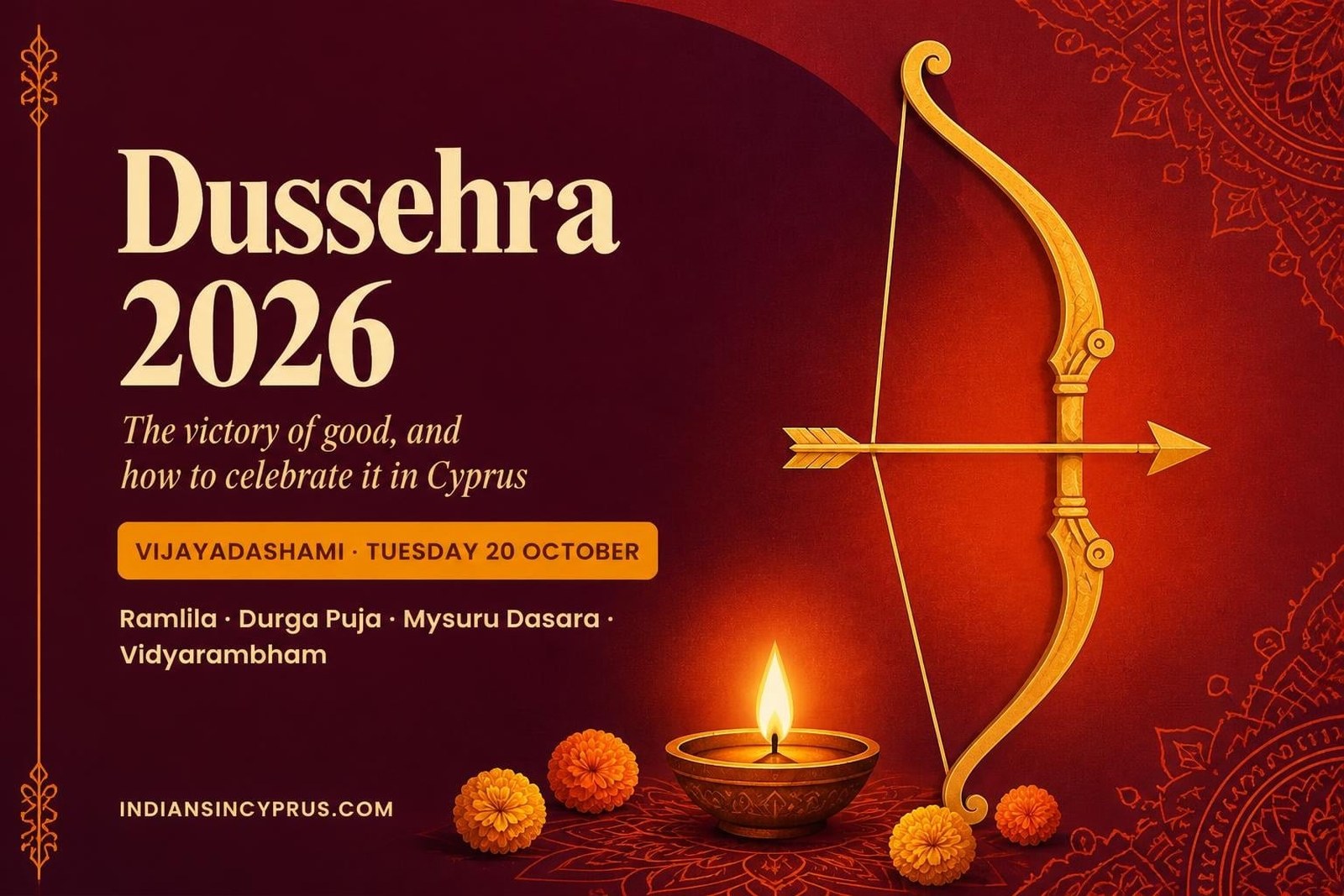
While Navratri 2026 runs from 11 to 19 October, with Dussehra on the 20th, here is a quick tour of how it looks across India. Find your own tradition, then discover your neighbour's.
Gujarat: Garba and Dandiya
In Gujarat the nine nights belong to dance. Circles of dancers move around a lamp or an image of the Goddess, clapping and turning in step, and later in the evening the dandiya sticks come out. In December 2023 UNESCO added the Garba of Gujarat to its list of the world's intangible cultural heritage, making it the fifteenth Indian tradition on that list.
Bengal: Durga Puja
In Bengal, the last days of Navratri become Durga Puja, the biggest celebration of the year. Whole neighbourhoods build pandals, temporary halls that can be works of art in their own right, and the final days are a round of visits, food and celebration before the idols are taken for immersion. UNESCO recognised Kolkata's Durga Puja in 2021, praising in particular how it involves women and marginalised groups.
Tamil Nadu, Karnataka and Andhra: the doll steps
Walk into a South Indian home during Navratri and you may find Golu: rows of dolls climbing a little staircase, often acting out a scene from the epics. The name changes with the language: Bommai Kolu in Tamil, Gombe Habba in Kannada, Bommala Koluvu in Telugu. Friends and neighbours visit one another to see whose display is the most inventive, and nobody leaves without sundal or something sweet.
Telangana: Bathukamma
In Telangana, women build Bathukamma: a cone of seasonal flowers stacked in layers like a temple tower. For nine days they gather around it to sing and dance, and on the last day, Saddula Bathukamma, the flowers are floated on water before sunset. It is Telangana's state festival.
Karnataka: Mysuru Dasara
Mysuru turns its Dasara into a state festival, Nada Habba. The palace is lit up, and the celebrations end with the Jamboo Savari, a procession of decorated elephants through the city. At its head, an elephant bears Goddess Chamundeshwari on a golden howdah of about 750 kg.
Kerala and the South: books, tools and first letters
On the ninth day, many families in the South keep their books, musical instruments and work tools before the Goddess for Saraswati Puja and Ayudha Puja, and leave them untouched until the next morning. In Kerala, Vijayadashami is the day of Vidyarambham, when small children write their first letters in rice or sand, beginning their education with a blessing.
North India: Ramlila and Dussehra
Across the North, the nights build up to Dussehra with Ramlila, a staged retelling of the Ramayana performed by local troupes, from Ayodhya and Varanasi to small towns. On Dussehra, giant effigies of Ravana go up in flames. UNESCO inscribed Ramlila on its heritage list in 2008.
Himachal: Kullu Dussehra
In the Kullu valley the calendar flips: the celebration begins on the very day the rest of India finishes, with the chariot of Lord Raghunath, and runs for a week. Hundreds of village deities are carried down from the hills to camp at Dhalpur ground, and the festival closes on the seventh day with the burning of Lanka.
What this means for you
- Keep your own tradition going: you don't need a full pandal or a nine-step Golu. A small shelf of dolls, a handful of flowers or one evening of Garba at home is enough to give children a taste of what the festival means in your region.
- Swap traditions with friends: Indians in Cyprus come from every state. Invite a Bengali neighbour to your Golu, or ask a Telugu friend to show your children how to stack a Bathukamma. Navratri abroad is a chance to learn the parts of India you didn't grow up with.
- Join the community: the Durga Puja and Navratri Garba at Shiv Mandir, Athienou, is on Monday 19 October from 5:30 PM. Dates, colours and more are in our Navratri 2026 guide.
- Share it with Cypriot friends: this post is an easy way to explain why your colleague is fasting or dancing all week. Forward it on.
- Show us your Navratri: send your Golu, Garba or Bathukamma photos through our submission form or tag @indiansincyprus on Instagram, and we may feature them.
Read also: Navratri 2026 in Cyprus: Dates, Colours and Where to Celebrate
Sources: TheBetterIndia, RauIAS, TheNewsMinute, IncredibleIndia, ETVBharat, TamilNaduTourism, Onmanorama, Vikaspedia, Sahapedia, TribuneIndia
Related stories
Spotted an error? Tell us.