Running on Two Time Zones: Burnout and Stress When You're an Indian Abroad
By Roshni Chopra · 30 September 2026
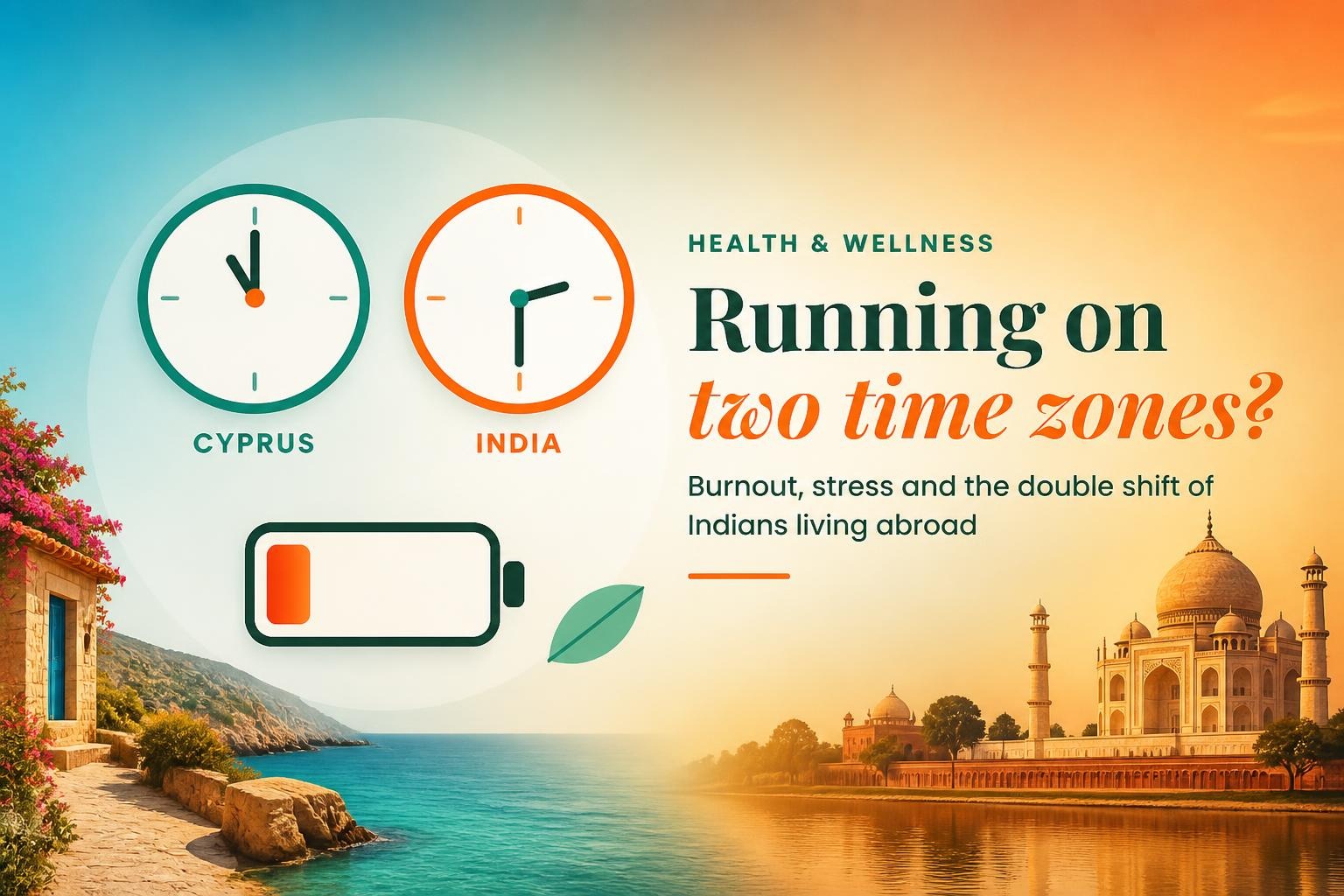
It's 11 at night in Limassol. You've just finished a long day at work, answered a few more emails on your phone, and now it's time for the family video call, because back home it's already past midnight and Mummy has been waiting. Tomorrow you'll be up early again. Sound familiar?
For many Indians living abroad, stress doesn't come from one place. It comes from living two lives at once, and after months of it, stress can quietly turn into burnout.
Stress or burnout: what's the difference?
Stress usually feels like too much: too many tasks, too little time. Burnout feels like too little: no energy, no motivation, nothing left to give. The World Health Organization describes burnout as the result of chronic workplace stress that hasn't been managed well, and it has three signs:
- Feeling drained or exhausted most of the time
- Growing distant, negative or cynical about your job
- Feeling less effective at work, even when you're trying hard
The double shift of living abroad
Work pressure is only part of the story. Many of us carry a second, invisible shift:
- Two time zones: calls with family, friends and sometimes a second job or business back home, squeezed into early mornings and late nights.
- Being "the settled one": sending money home, helping siblings, handling property or paperwork in India from thousands of kilometres away.
- A job that feels too important to question: when your residence permit is linked to your employer, it can feel impossible to push back on long hours or ask for help.
- Missing the big moments: weddings, festivals, a parent's illness, all watched on a phone screen, often with a heavy dose of guilt.
- A small circle: fewer people nearby who really know you, and a culture where we're taught to "adjust" and not talk about how we feel.
Warning signs to watch for
- You wake up tired, even after a full night's sleep
- Sunday evenings fill you with dread
- You snap at people you love over small things
- Headaches, stomach trouble or poor sleep that won't go away
- You've stopped calling friends or going to community events
- More screen time, junk food or drinks just to switch off
What actually helps
- Give family calls a time slot. A fixed daily or weekly call time works better than being on call around the clock. Families adjust faster than we expect.
- Protect your sleep. Put the phone away at a set hour. Late-night scrolling and calls cut into the rest your body needs.
- Use the island. A walk by the sea, a weekend hike in the Troodos mountains or simply sitting in the sun is one of the best perks of living in Cyprus.
- Lean on the community. Temple, gurdwara and church gatherings, cultural festivals, sports groups and friends from home all help. Loneliness and burnout feed each other.
- Make money decisions on paper. Set a clear monthly amount for sending home. It's easier to say a kind "no" when you have a plan.
- Take your leave. Holidays exist for a reason, and a trip home counts as rest only if you actually rest.
- Borrow from our own traditions. A few minutes of pranayama, yoga or meditation a day can calm a racing mind, and there are regular sessions in Cyprus to get started.
When to get help
If you've felt low, anxious or exhausted for weeks, it's not a weakness to ask for support. Start with your GESY personal doctor, who can talk things through and refer you if needed.
- Cyprus Samaritans: 8000 7773 (free, confidential emotional support)
- Emotional support line: 116 123
- Emergency: 112
Moving abroad takes courage. Looking after yourself while you're here is part of the same journey, for you and for the people who depend on you.
This article is for general information only and isn't medical advice. If you're struggling, please speak to a doctor or a mental health professional.
Read also: Pause, Breathe, Reset: Swami Jyotirmayah Brings Inner Peace to Cyprus
Sources:
Related stories


Spotted an error? Tell us.